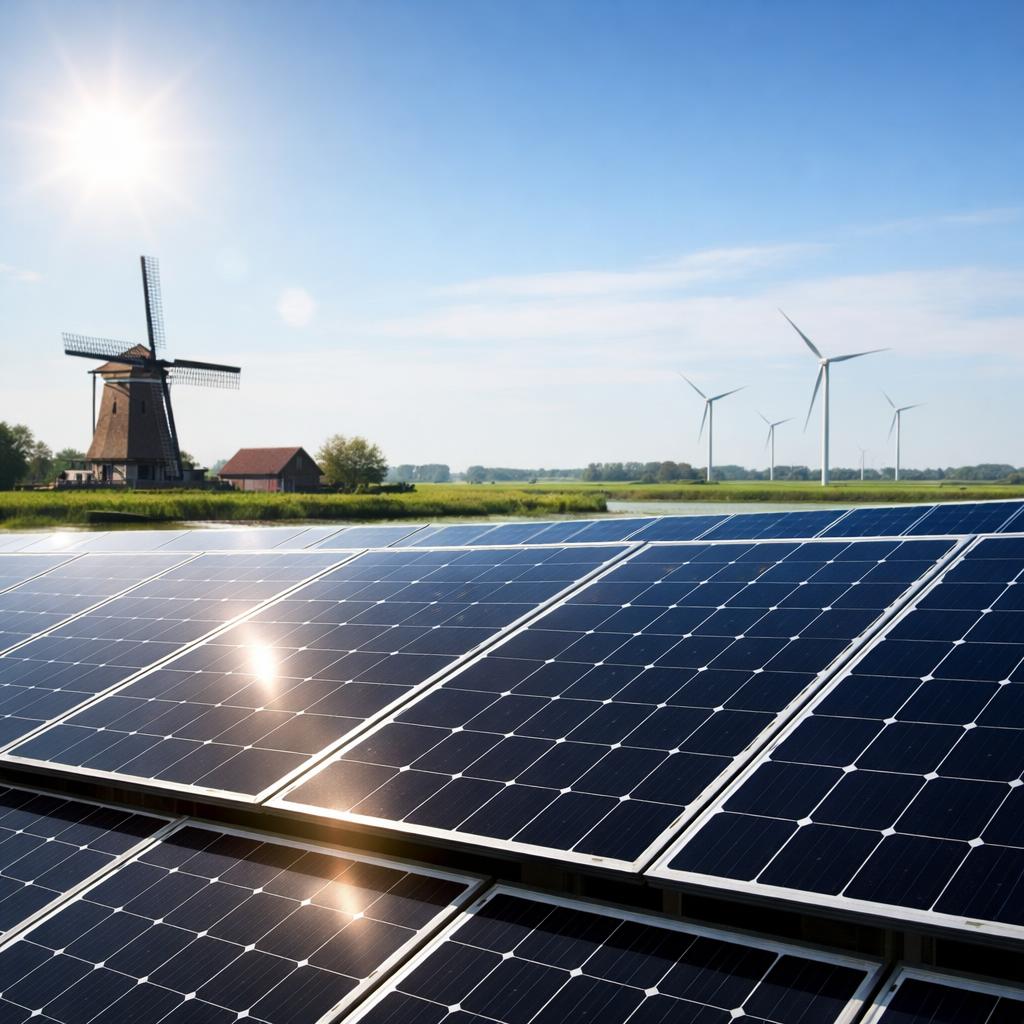
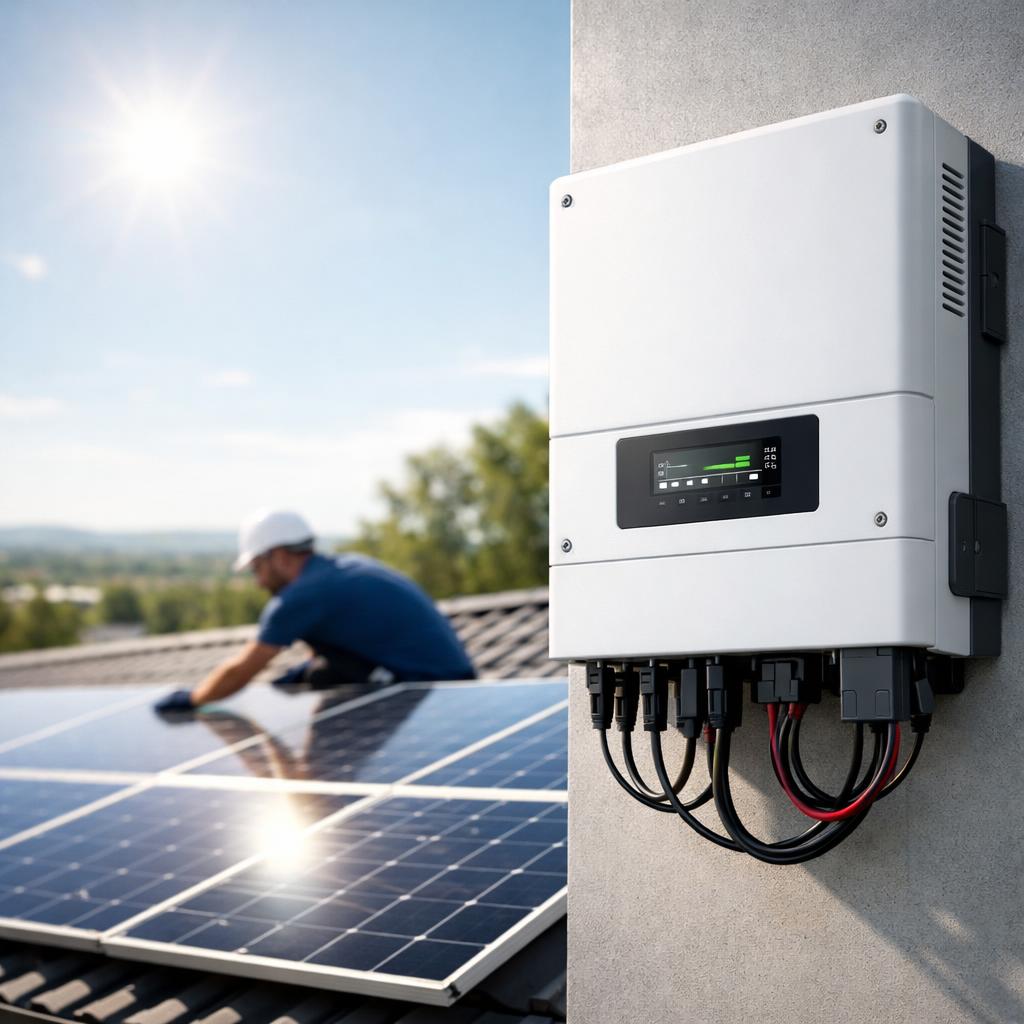
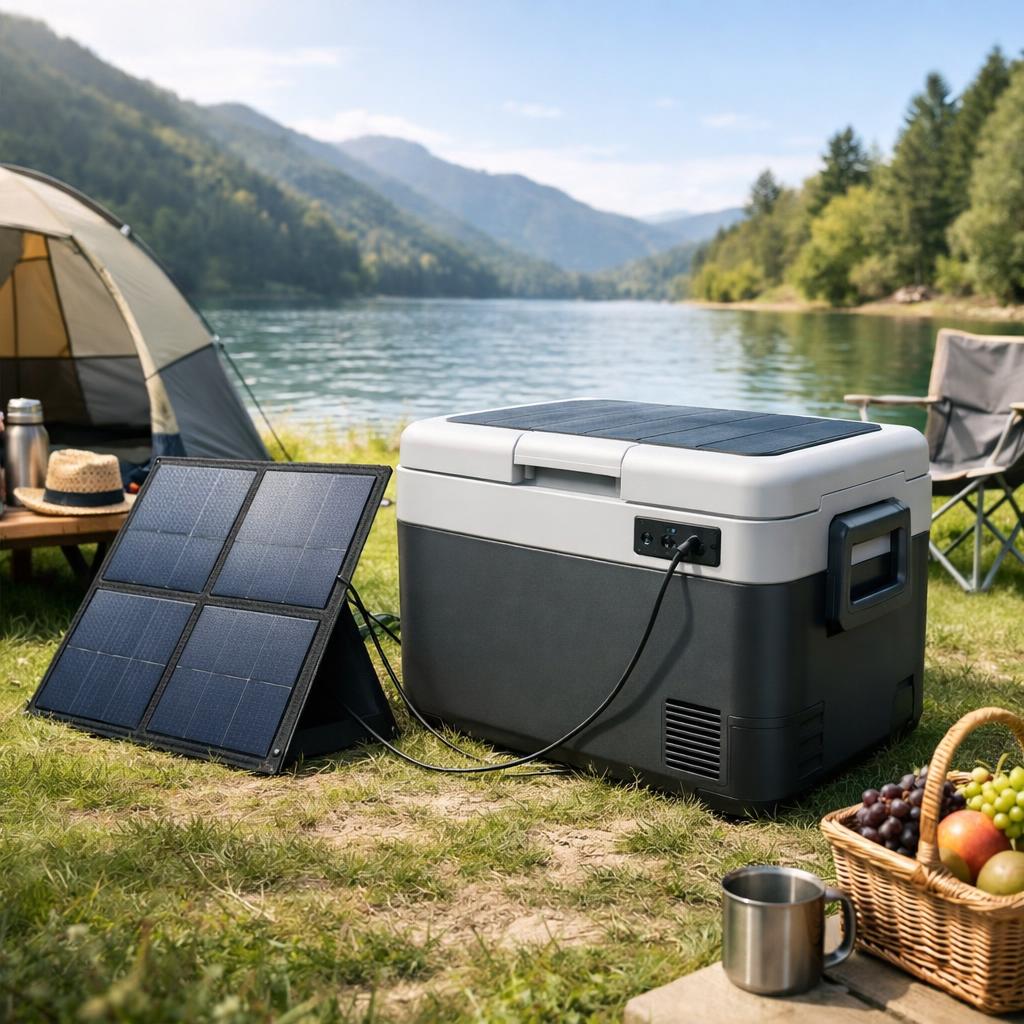
Anyone who travels off-grid for several days will benefit most from a solar power system that is light, sturdy and quickly deployable. Which solar panels and accessories are best suited for expedition trips therefore not only depends on the panel, but also on your power consumption, your vehicle, the climate and the devices you want to use along the way. For many travelers, portable or foldable panels are ideal when flexibility is important, while fixed roof panels are better suited to long routes with daily power consumption.
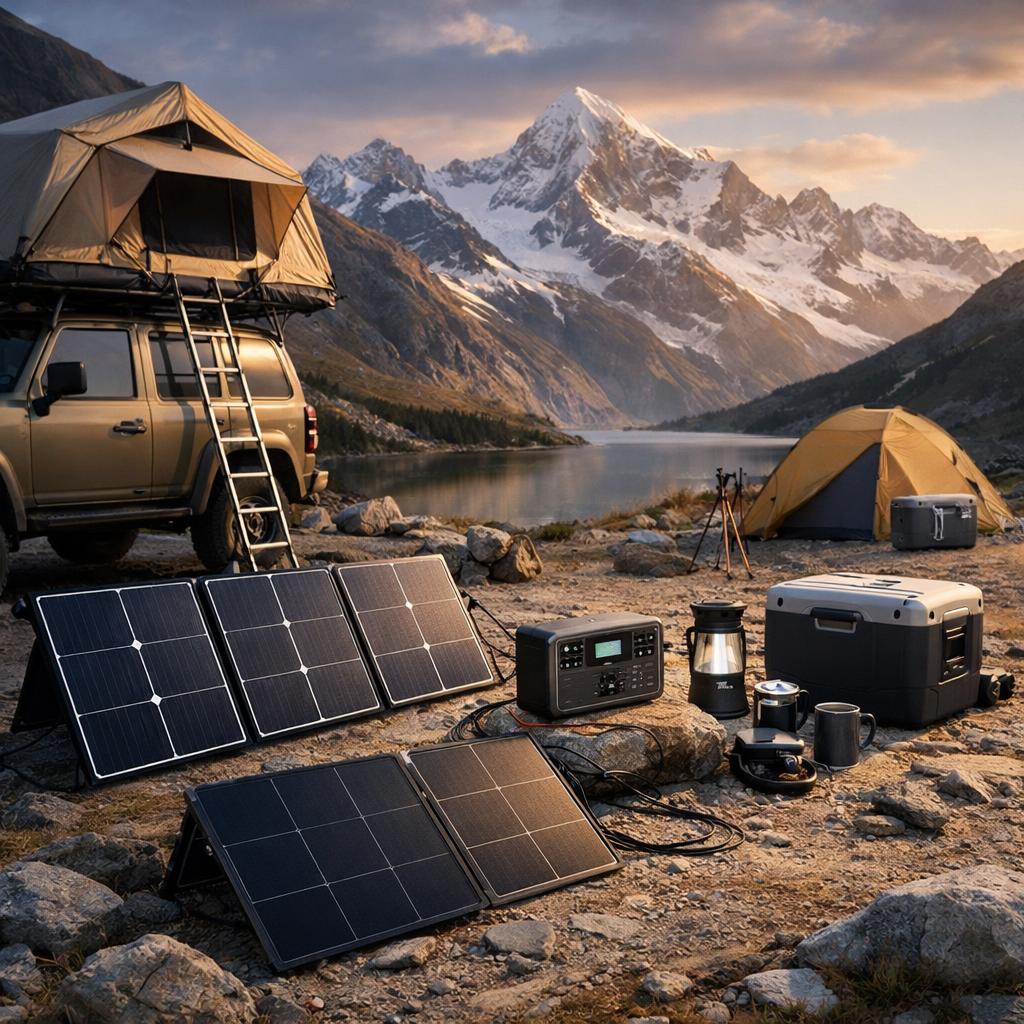
If you already use a portable battery or want to put together a complete set, also look at which power station suits you for off-grid travel. This way you avoid only looking at wattage and later discovering that connections, charging profiles or voltage do not match. On expeditions, reliability usually counts more than high peak power on paper.
When purchasing, always pay attention to compatibility between panel, charge controller, battery, plugs and voltage. Check this in advance per system, especially when you combine parts from different brands.
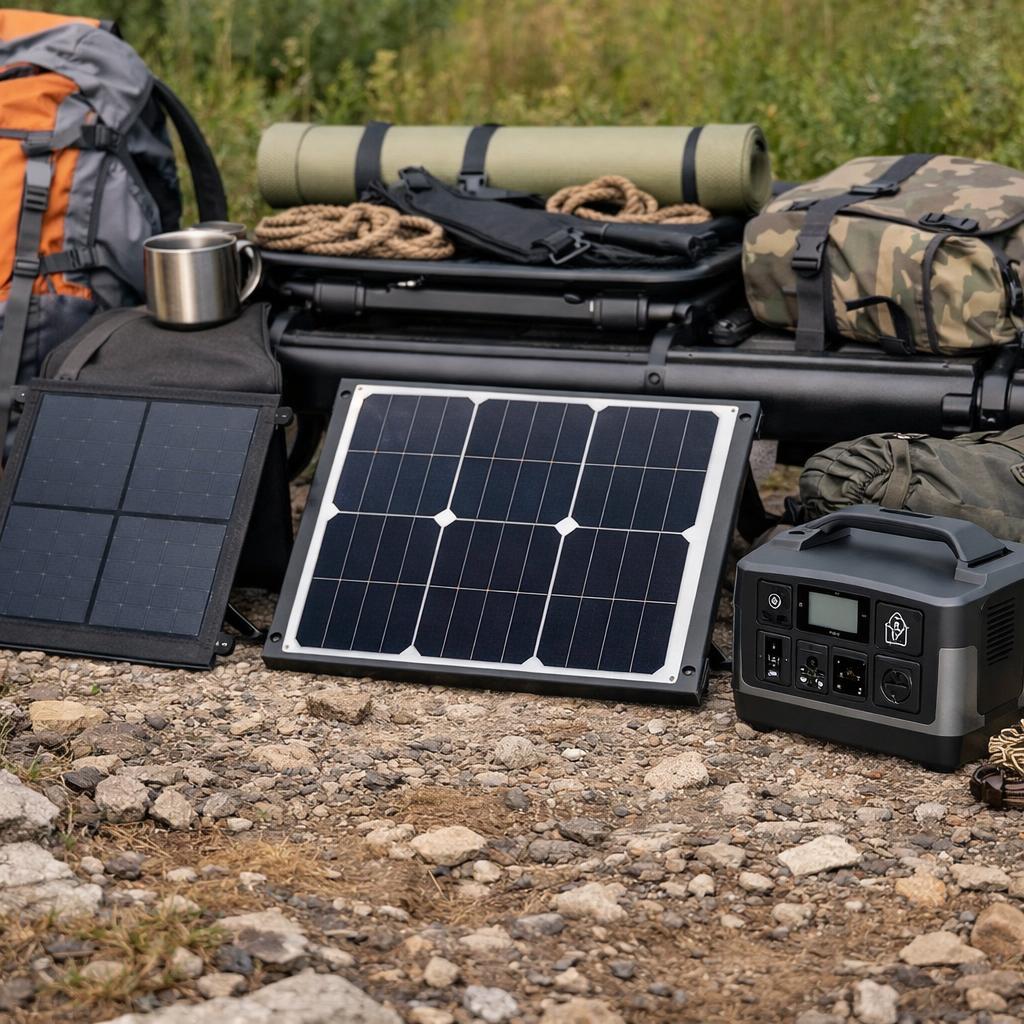
Comparative visual of a foldable solar panel, fixed roof panel and compact power station next to expedition equipment; place high in the article after the introduction.
What good solar panels for expedition trips should meet
Good solar panels for expedition trips not only provide sufficient power, but remain usable under varying conditions. Therefore, look beyond the specified wattage. In practice, the yield is often lower due to heat, partial shade, dust, clouds or a less favorable angle towards the sun. For short trips, 60 to 120 watts is often enough for telephones, lighting, GPS, cameras and a small battery. For a compressor cool box, laptop or intensive daily use, you will probably end up with 160 to 300 watts, divided over one or more panels.
Smartly weigh portability, weight and weather resistance
Foldable solar panels for overlanding and off-grid travel are useful if you often change camps or want to place the panel separately from the vehicle to avoid shade. Fixed panels on the roof or a carrier are more convenient if you want to charge while driving and do not want to keep building up. In addition, pay attention to weight, folded size, cable quality, IP rating and the strength of handles or mounting points. An expedition panel must be able to withstand vibrations, splash water, dust and frequent packing and unpacking, without connectors quickly wearing out or the frame deforming.
Also look at the type of solar cell and the build quality. Monocrystalline panels are often popular because they are relatively efficient with limited surface area. For mobile use, a sturdy laminate or a well-finished textile panel is usually more practical than a fragile model that is mainly intended for occasional camping. Those who often travel in hot or dusty areas will benefit from panels that are easy to clean and have sturdy cable exits.
What accessories you need for a reliable off-grid system
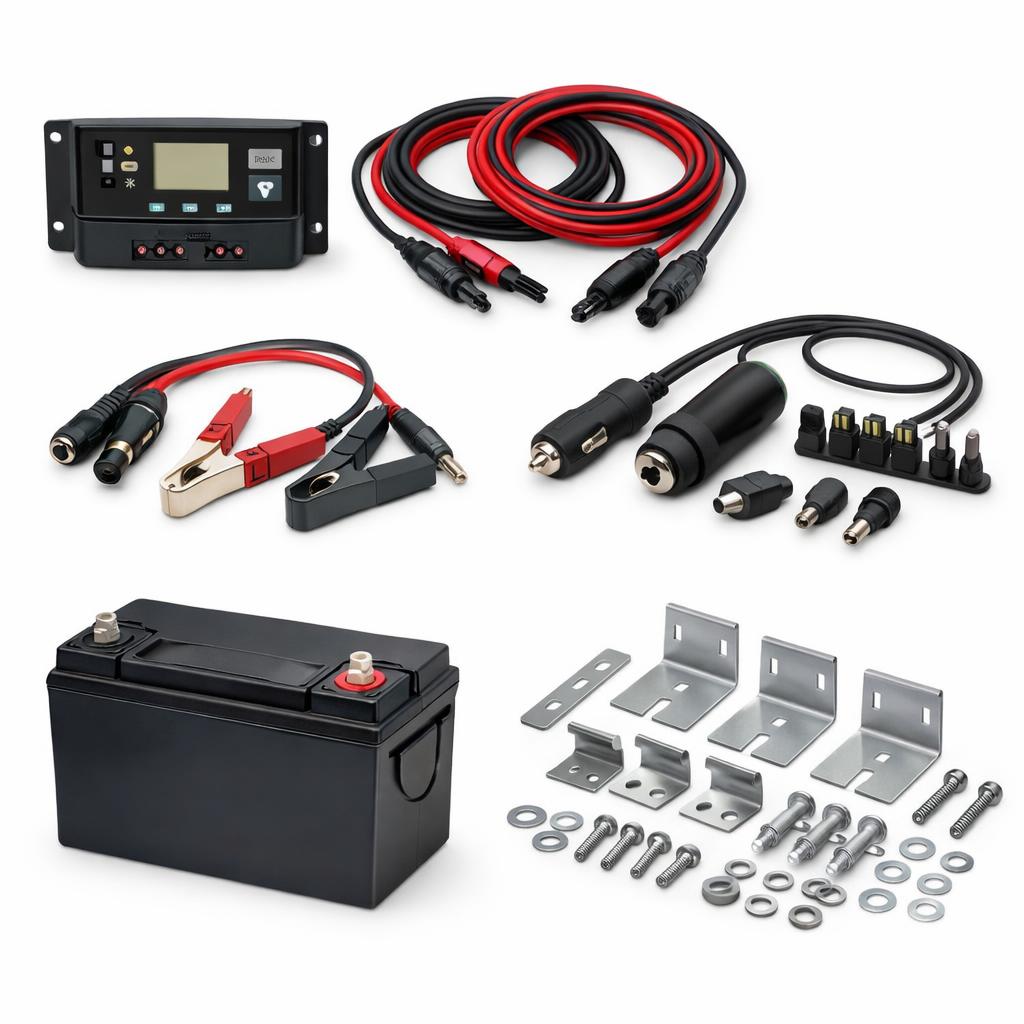
Anyone who wants to know which accessories are needed for solar panels on an expedition must look further than just a panel and a battery. A reliable system usually consists of a suitable charge controller or built-in control in a power station, sufficiently long cables, fuses where necessary, adapter sets for the correct plugs and mounting material that suits your vehicle or camp setup. In practice, it is precisely these components that determine whether charging runs smoothly or fails due to voltage loss, loose connections or damp couplings.
Consider charge controller, power station, cabling and mounting
First check whether your panel is directly suitable for your battery or power station, or whether you need a separate controller. Also read how a charge controller works for mobile solar panels if you are unsure about connections. Then choose cables with sufficient thickness and solid connectors, plus a storage bag that keeps adapters and spare couplings dry and organized. Sturdy roof brackets, glue or screw systems and neat cable entries are important for permanent installation. For portable use, fold-out supports, pegs and extension cables are often more useful, because they allow you to find a good sun position more quickly.
Also consider simple spare parts. An extra adapter, a short spare cable, some fuses and waterproof storage covers take up little space, but can save a lot of hassle. If you travel far away from facilities, a set that you can easily replace or expand is often more useful than a closed system with rare parts. Compatibility between panel, charge controller, battery, plugs and voltage should always be checked before purchase.
Practical infographic with accessories such as charge controller, cables, adapter sets, battery and mounting materials in a simple diagram; place in the accessories section.
This is how you choose the best set for your route, vehicle and consumption
Choosing solar panels for a power station during expeditions starts with a simple consumption plan. Make a note of which devices you use each day, how many hours they are active and whether they operate on 12V, USB or 230V. For a weekend trip with light consumption, a compact set with a foldable panel and a medium-sized power station is often sufficient. If you are going away for longer, traveling through cloudy regions or using a cool box, extra battery capacity and more panel surface area is usually wiser than just a heavier inverter. Also consider how often you drive, because charging via the vehicle can be a useful addition.
Choose panel type and accessories for short or long expeditions
For short expeditions, mobility matters most. Then choose light panels, minimal cabling and a set that can be installed within minutes. For long distances, durability, ease of repair and redundancy are more important. A combination of a fixed panel on the roof and an extra portable panel often works well: you can recharge on the go and can optimally align the separate panel at camp. Which solar panels and accessories are best suited for expedition trips is therefore mainly a matter of balance between portability, reliability and expandability, not just the highest wattage.
Additionally, take your vehicle and travel style into account. A compact 4x4 or motorcycle requires light, easy-to-store solutions, while a camper or overland truck has space for permanent mounting and a larger battery. If you mainly travel in forests or mountain areas, a portable panel is often smarter because you can place it out of the shade. In open, sunny areas, a fixed roof panel is attractive because it automatically provides daily yield without additional actions.
Ultimately, make your choice based on the system that you will actually use consistently. A slightly smaller but practical system often yields more on the road than a large set that is difficult to set up.
Conclusion:
Which solar panels and accessories are best suited for expedition trips differs per traveler, but the best choice is usually the set that continues to work consistently under real field conditions. Choose a panel type that suits your travel style, combine it with the right charge controller or power station and pay as much attention to cables, plugs and mounting as to the panel itself. For mobile travelers, folding panels are often the most flexible, while fixed panels excel for long routes and daily use. Always check the compatibility between panel, charge controller, battery, plugs and voltage before purchase, so that you are not faced with any surprises along the way.
FAQ
How many watts of solar panels do I need for a multi-day expedition?
That depends on your daily consumption and how much sun you realistically expect. For basic use such as telephones, GPS, lamps and cameras, 60 to 120 watts is often sufficient. If you use a laptop, drone batteries or a cool box, 160 to 300 watts is more realistic. It is better to allow some margin, because the actual yield along the way is usually lower than the specified maximum.
Are foldable solar panels or fixed panels more useful for expeditions?
Foldable panels are more convenient if you want to be flexible, park in the shade or travel light. Fixed panels are more practical if you need electricity every day and also want to charge while driving. Many expedition riders ultimately opt for a combination: a fixed panel for basic load and a portable panel for extra yield at camp.