Yes, but usually not in the way that many people envision. There are portable cool boxes that can work well with solar energy, but in practice this often does not happen due to a solar panel that is directly connected to the cool box. The electricity usually runs via a built-in battery, a separate household battery or a compact power station that is charged during the day by solar panels. The honest answer to the question Are there portable cool boxes that can be charged via solar energy? is therefore: yes, but only if power, connections and charging options are well matched.
That distinction is important, because not every cool box works the same. A compressor cool box has very different requirements than a simple thermoelectric box. If you first look at the differences between cool box types, you will often make a better choice later. For campers, road trippers, boat owners and festival goers, it ultimately comes down to three things: how much power the cool box really uses, how much solar yield you can expect along the way and how reliable the system remains off-grid.
How solar charging for portable coolers really works
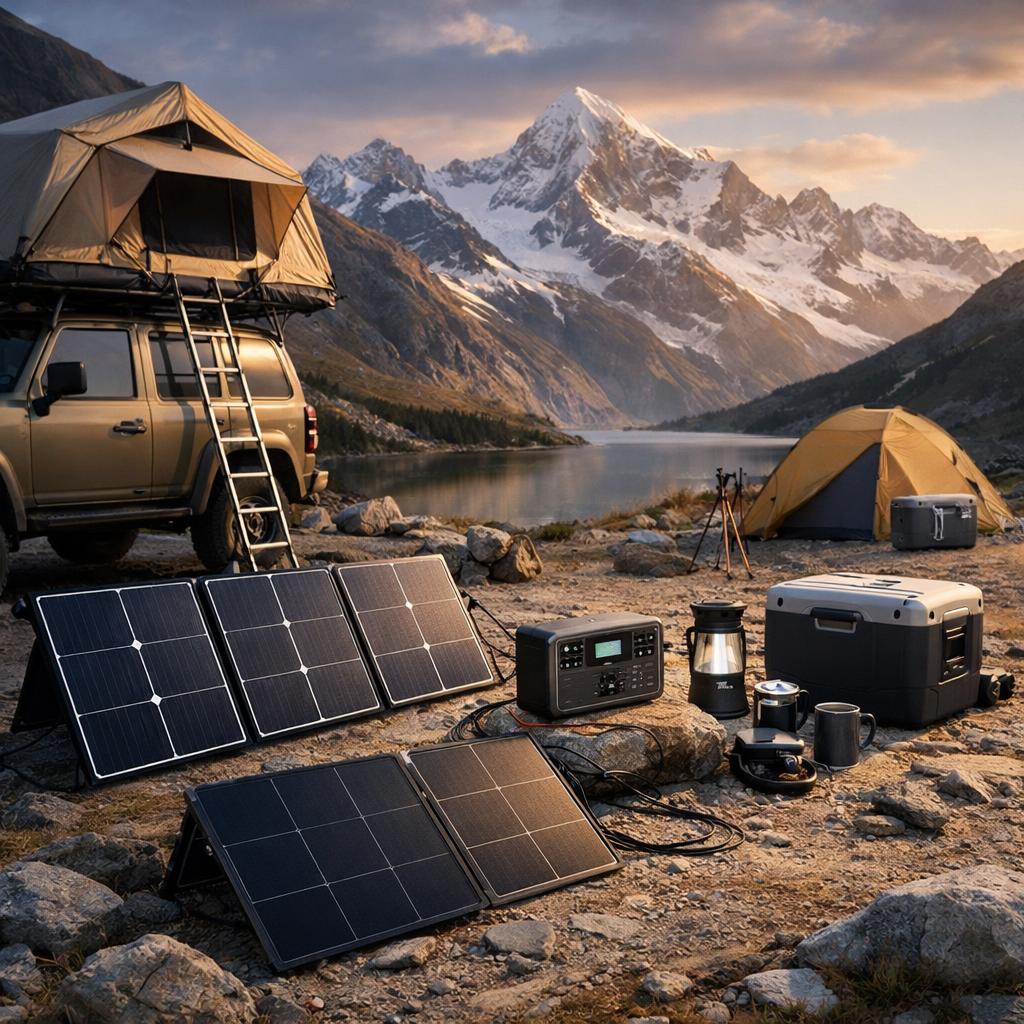
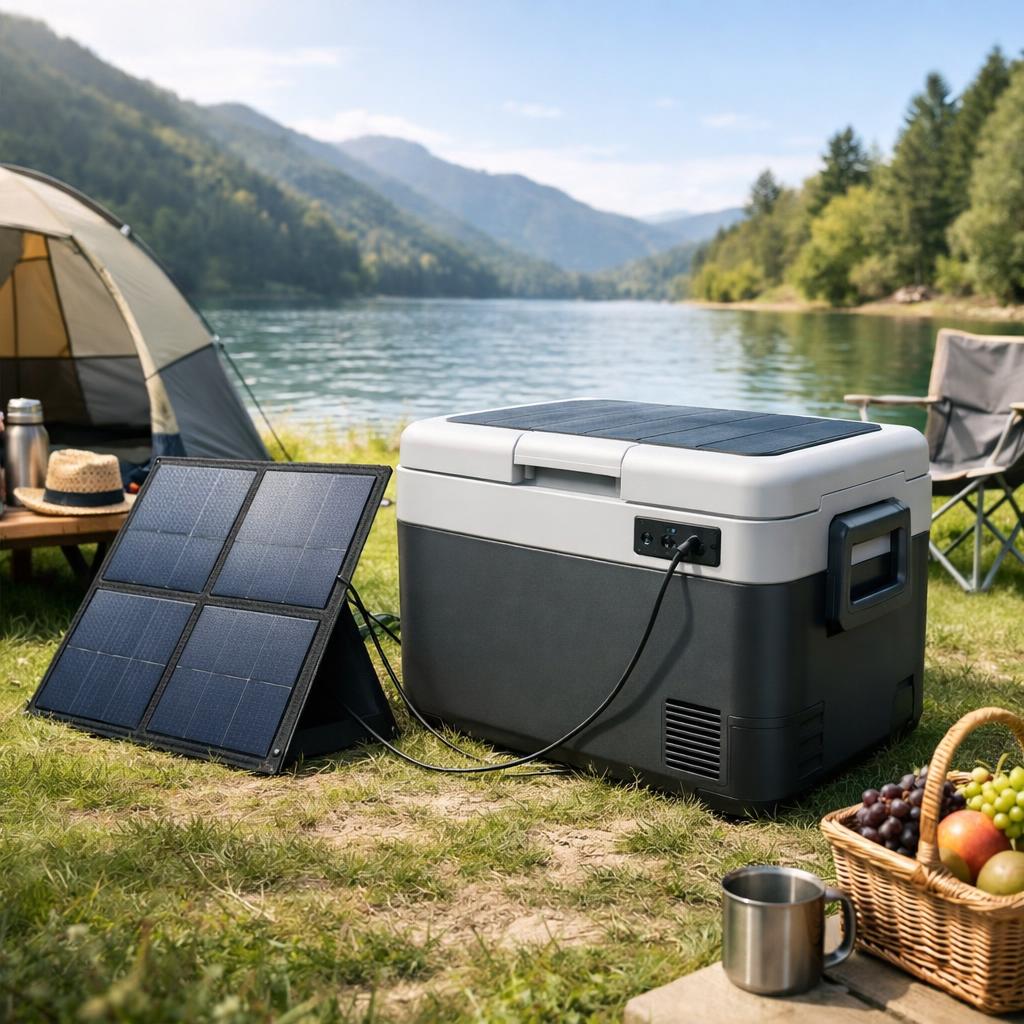
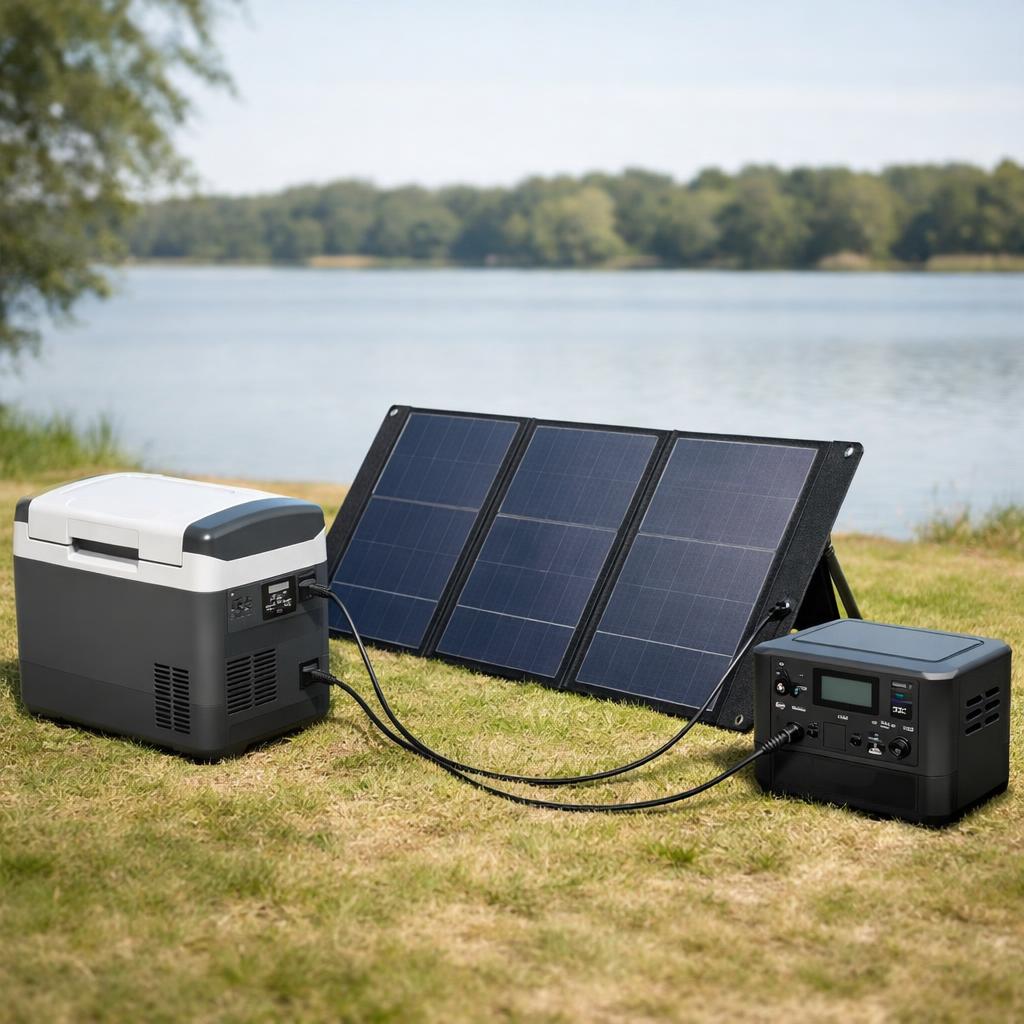
Using a portable solar cooler usually means building a small energy system. That system consists of the cool box itself, a form of power storage or charge control, and a solar panel. Some models have a built-in battery that you can charge via mains power, the car or sometimes a compatible solar panel. Other cool boxes only work on 12V or 24V and therefore require an external battery or power station. Such an intermediate step is often necessary, especially with a compressor cool box, because a solar panel itself is usually too variable to supply the cool box directly in a stable manner.
The difference between built-in battery, 12V connection and solar panel
A built-in battery is useful because it remains compact and you need fewer separate parts. The disadvantage is that the battery capacity is often limited and not every model accepts the same charging input. A 12V connection usually means that the cool box itself does not store energy, but draws power directly from a car battery, boat battery or portable battery. A solar panel adds an extra variable: the yield changes depending on the angle of the sun, heat, cloud cover and shade. That is why a charge controller or power station often works better in practice than a direct connection. Always pay attention to voltage, amps, connectors and the maximum charging input of the cooler or battery, because a wrong combination is not only inefficient, but can also cause malfunctions.
What you should pay attention to to make off-grid cooling feasible
The biggest mistake with off-grid cooling is only looking at the volume in liters and not at the daily power consumption. Especially with a compressor cool box, consumption depends on the outside temperature, the set temperature, the insulation, how often you open the lid and whether you already load cooled products. In practice, a larger but well-insulated box can sometimes be more economical than a smaller and less efficient model. Therefore, look beyond the marketing text and try to find out how many watt hours per day the cool box uses under realistic conditions.
Smartly coordinate panel power, battery capacity and consumption
If you are looking for the best portable cooler for camping with a solar panel, you need to look at the big picture. A panel that is too small will not provide enough power during the day, while a battery that is too small will quickly discharge at night or when it is cloudy. For multi-day trips, a reasonable energy reserve is usually more important than counting on perfect sunshine. That is why it is smart to also look at choosing a solar panel and portable power storage. In addition, pay attention to practical points such as cable length, charging time, foldable panels, shade at the campsite and whether the cool box can run directly on DC. The latter is often more efficient than working via alternating current, because you lose less energy during conversion.
Your usage pattern also makes a difference. For a weekend trip with many car journeys, you can often charge enough along the way via the car's 12V connection. If you stand still in one place for several days, solar capacity becomes much more important. On a boat, space, mounting and salty air influence the choice of panel and cabling. Calculating a safety margin in advance prevents food or drinks from heating up halfway through the trip.
Conclusion
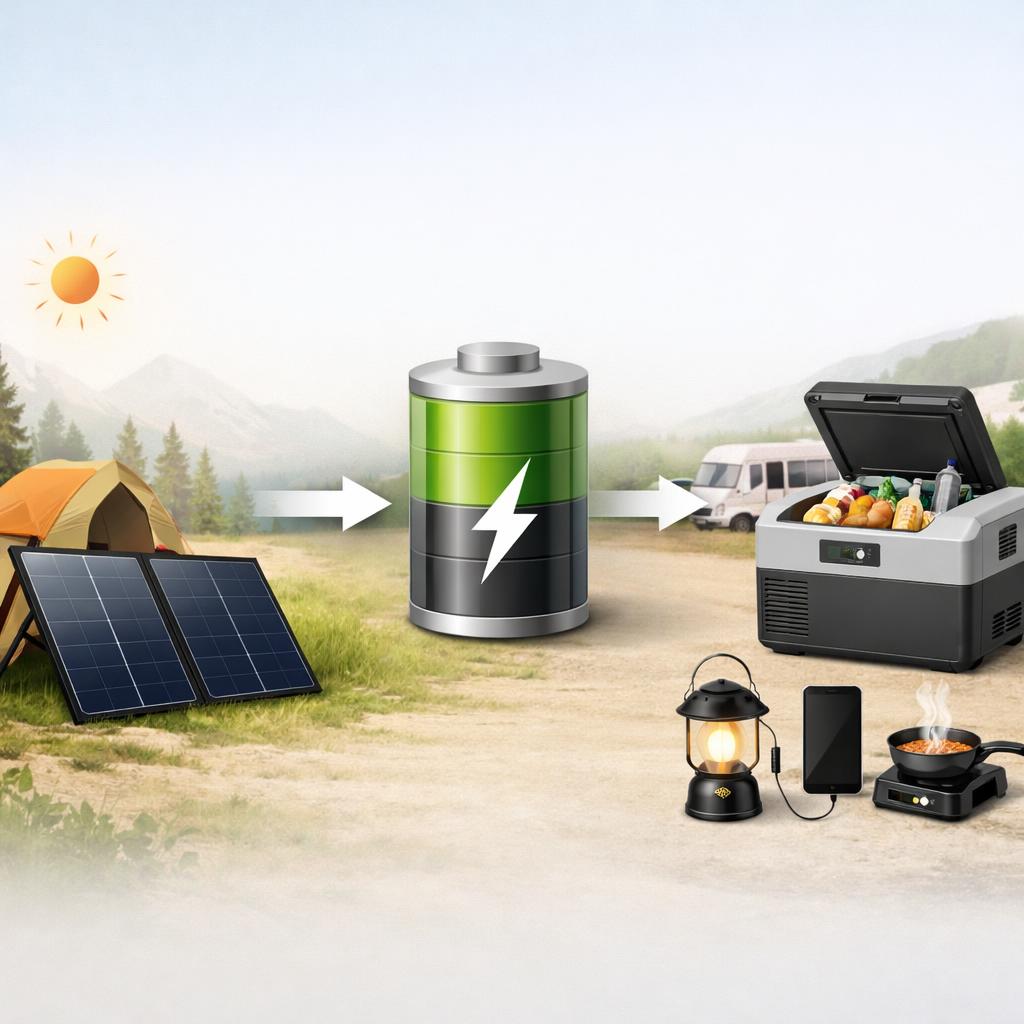
Are there portable coolers that can be charged via solar energy? Yes, absolutely, but mostly indirectly. In most practical setups, the solar energy first flows to a built-in battery, a separate battery, a charge controller or a power station. Only then does the stored electricity power the cool box. That is also the reason why some combinations work without any problems and others are disappointing in practice.
The smartest approach is not to just choose a cool box, but to immediately assess the entire system. First check which type of cool box you need, then estimate the daily consumption and then adjust the panel power and battery capacity accordingly. This can work great for camping, road trips, boating and longer stays without mains power. For short day trips, a simple 12V solution is often enough. If you calculate realistically and pay attention to compatibility, solar energy can keep you cool surprisingly reliably.
FAQ
Do you need a separate battery to use a portable solar cooler?
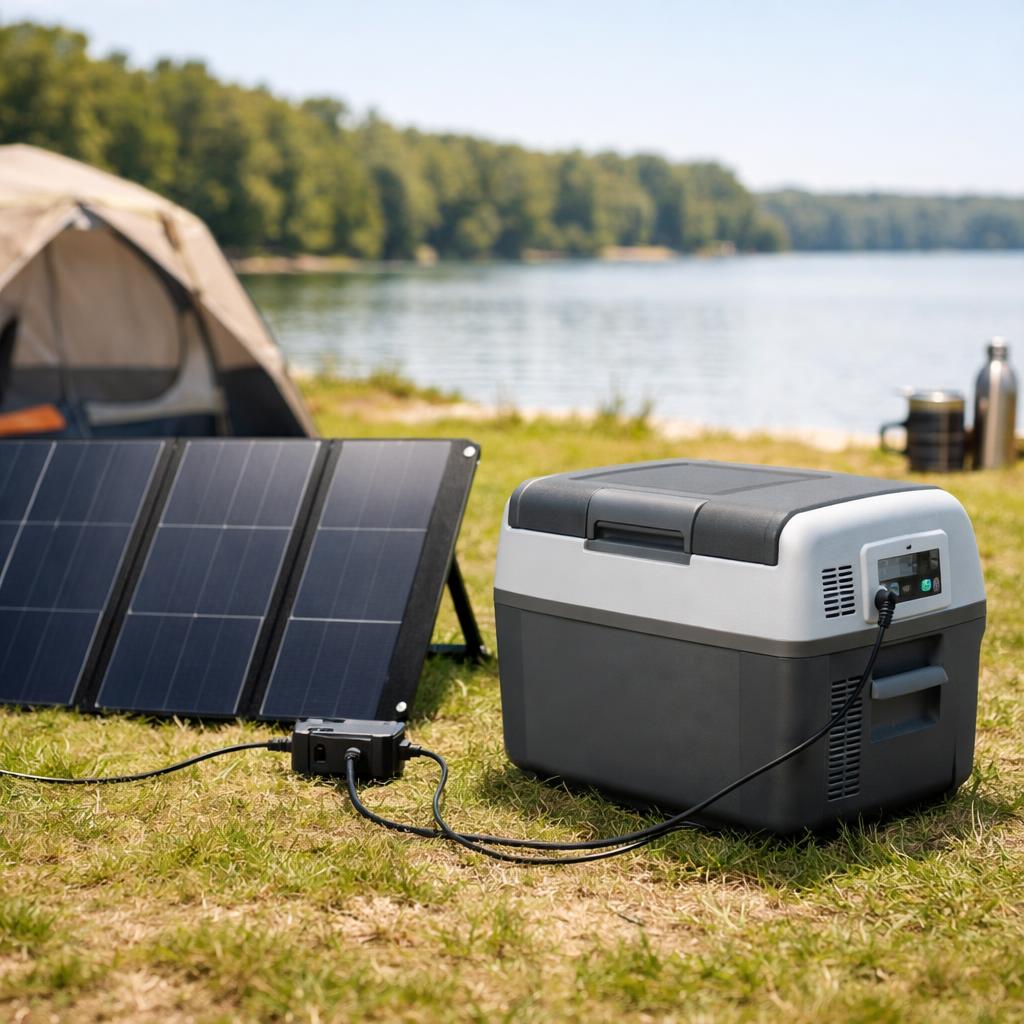
Often yes. Some portable coolers have a built-in battery, but many models only work on 12V or 24V and therefore require an external battery or power station. This is because a solar panel does not supply constant power. With a battery you can absorb fluctuations in sunlight and the cool box will continue to work even when there are temporary clouds or when the sun has already set.
Does a portable compressor cool box also work on cloudy days with a solar panel?
Yes, but usually not on solar panels alone for a long time. On cloudy days, the yield of a panel often drops significantly, meaning that the cool box does not receive enough power to continue running independently. In practice, it works best if you have sufficient battery reserve, use a slightly larger panel or can charge extra via the car or mains power.